The Audi h-tron quattro concept
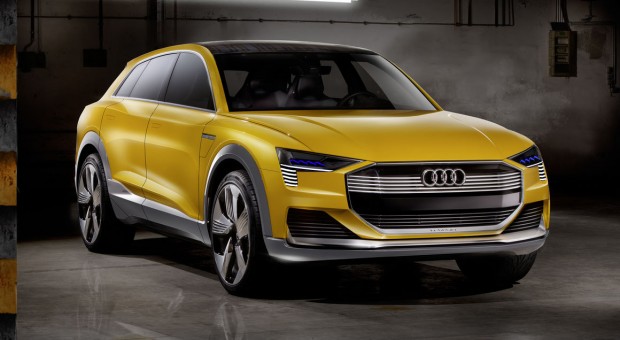
The brand with the four rings is unveiling its concept car Audi h-tron quattro concept at the NAIAS 2016 in Detroit – a sporty SUV that uses hydrogen as its energy source. The concept car combines a highly efficient fuel cell achieving an output of up to 110 kW with a battery that provides a temporary boost of 100 kW. Audi’s fuel cell technology paves the way for sustainable mobility with the sporty performance for which the brand is renowned.
The Audi h-tron quattro concept uses only around one kilogram (2.2 lb) of hydrogen per 100 kilometers (62.1 mi). It takes only about four minutes to fill the tank, giving the car a range of up to 600 kilometers (372.8 mi). The conspicuously aerodynamic design with a Cd value of 0.27 plays a major part in its outstanding efficiency.
In another major step, Audi will go into production with its new technologies for piloted driving and parking in 2017 along with the next generation of the A8 luxury sedan. The technology study already provides a glimpse of things to come.
The concept car Audi h‑tron quattro concept
Technology
▸Fuel cell drive with additional lithium-ion battery for boosting and recuperation
▸Fifth-generation fuel cell, new materials for added efficiency
▸Range of up to 600 kilometers (372.8 mi) on one tank of fuel, consumption around one kilogram (2.2 lb) of hydrogen per 100 kilometers (62.1 mi), refueling takes around four minutes
▸Fuel cell performance: up to 110 kW, extra boost of up to 100 kW for short periods, system torque in excess of 550 Nm (405.7 lb ft)
▸From 0 to 100 km/h (62.1 mph) in less than 7 seconds, top speed electronically governed at 200 km/h (124.3 mph)
▸Electrified quattro layout: one electric motor at front and one at rear, intelligent control strategy for interaction between power units
▸Three hydrogen tanks with total capacity of around six kilograms (13.2 lb) at 700 bar
▸Chassis with adaptive air suspension sport and 22‑inch wheels
▸Technologies for piloted driving and parking, central driver assistance system (zFAS)
Aerodynamics and design
▸SUV with sporty styling, low greenhouse, tapered rear end
▸Length 4.88 meters (16.0 ft), width 1.93 meters (6.3 ft), height 1.54 meters(5.1 ft), five doors
▸Cd value of 0.27, elaborate detailed measures such as cameras instead of exterior mirrors and movable aerodynamic elements on underbody, sides and rear
▸Outstanding aeroacoustics
▸Lighting design with OLED elements at front and rear, headlights in Matrix laser technology
▸World’s largest in-car solar roof, up to 320 watts output or additional range of up to 1,000 km (621.4 mi) per year
Interior
▸Optimized package: ample space for four persons, large luggage compartment with capacity of 500 liters (17.7 cu ft), “luggage butler” for optimum, quick stowing of luggage items
▸Heat pump for high-efficiency climate control
▸Progressive interior design, fusion with operating and display concept
▸Audi virtual cockpit curved OLED as instrument cluster
▸Mobile Rear Seat Entertainment with OLED Audi tablets
▸Steering wheel with touch surfaces in the spokes
▸Online connectivity via LTE, broad range of connectivity functions
Source: Audi, read more